
Zurich Drinking Water Map: Monitoring Water Quality in the Canton of Zurich
Press Release from the Canton of Zurich, 27 March 2023
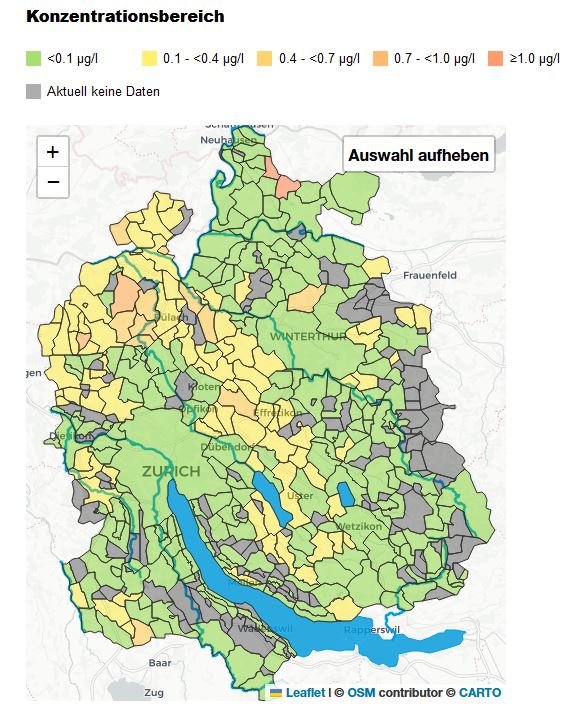 Image source:
Canton of Zurich
Image source:
Canton of Zurich
Drinking water in the Canton of Zurich is among the most strictly monitored resources in Switzerland. Regular laboratory analyses conducted by the Cantonal Laboratory Zurich (KLZH) and local water suppliers ensure that drinking water quality in Zurich consistently meets all legal safety standards.
To improve transparency, the canton has introduced the interactive “Zurich Drinking Water Map”. This digital platform provides detailed insights into water quality in Zurich and allows residents and businesses to access up-to-date information about their local drinking water supply.
The map presents weekly results from official inspections as well as monitoring data from water suppliers. Measurement values are clearly visualised using colour coding and can be compared with historical data or regional benchmarks. This makes it easier for users to understand trends and evaluate water quality in their region.
One of the key monitoring priorities is the detection of residues from the now-banned pesticide chlorothalonil. The Zurich Drinking Water Map displays the two most common degradation products of this substance and highlights potential contamination in groundwater, spring water, or treated drinking water.
Recent measurements across the Canton of Zurich show encouraging results: none of the analysed water samples exceeded legal limit values. However, authorities continue to implement long-term strategies to prevent future contamination and to protect drinking water resources.
Possible measures include infrastructure upgrades in water treatment facilities as well as the integration of modern filtration technologies. Depending on the local conditions, these improvements may take several years to implement.
Municipalities are also required to apply the precautionary principle when managing water resources. Ensuring sustainable water quality remains a priority for local authorities and water suppliers across the canton.
Since 2020, an expanded task force has been addressing drinking water protection. The initiative “Zurich Water Quality Coordination” (KoWaQ.ZH) brings together experts from the Cantonal Laboratory Zurich, AWEL, the Office for Landscape and Nature (ALN), municipalities, and regional water suppliers.
One of the coordination group's major projects is the interactive water quality map, which provides transparent and accessible information about the Zurich drinking water supply in near real time.
Clean drinking water is one of the most important natural resources. While many regions around the world still lack reliable access to safe water, residents of the Canton of Zurich benefit from exceptionally high drinking water standards.
Authorities and municipalities remain committed to continuously improving drinking water and wastewater management systems in order to protect water quality for future generations.
✔ Heavy metals and contaminants
✔ For general drinking water testing and water softeners
✔ Legionella, heavy metals and pollutants
✔ For general drinking water and softeners
✔ For your property
Analysis of mould and drinking water
✔ Indoor air analysis for mould and >50 chemicals
✔ The complete worry-free package for your property
Analysis of mould, chemicals and drinking water

✔ Heavy metals and contaminants
✔ Separate bacteria test recommended
✔ Focus on bacterial contamination
✔ For general drinking water, softeners

✔ Most common pesticides
✔ Glyphosate separate analysis
✔ E. coli, coliform bacteria
✔ Enterococci

✔ 20 common PFAS chemicals
✔ Per- and polyfluorinated alkyl substances